The Sequencer: The Musician Stops Playing Every Note for the First Time
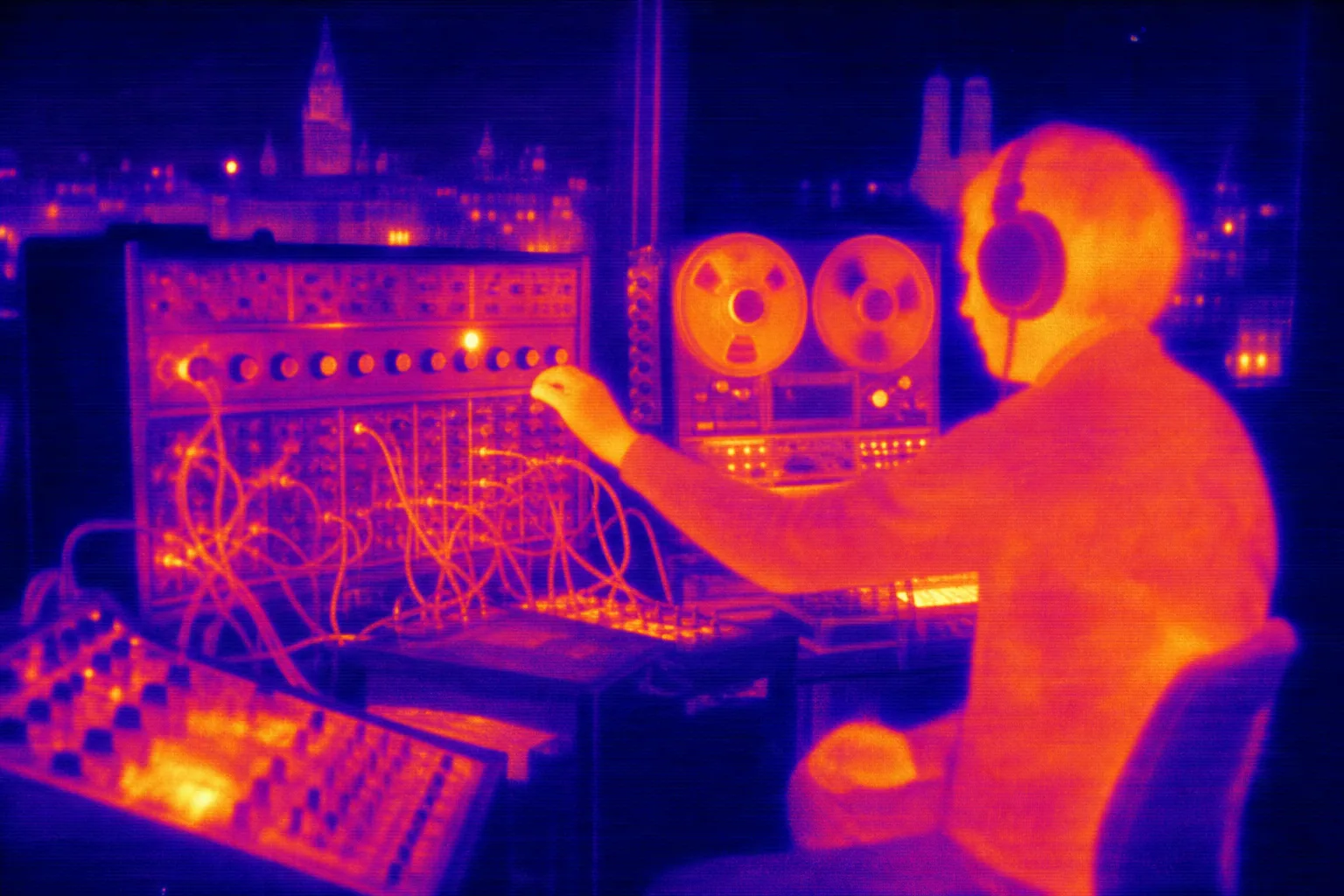 thermal
In the summer of 1977 in Munich the producer Giorgio Moroder and his co-writer Pete Bellotte were recording the song “I Feel Love” for Donna Summer. A modular Moog synthesizer had been lent to them by the composer Eberhard Schoener, and along with the synthesizer came Schoener’s assistant, Robby Wedel. Wedel showed them how to make the synthesizer play strictly in time with the tape recorder: even clicks, a click track, were recorded on one of the tape’s tracks, and the synthesizer stepped from note to note following those clicks. Moroder later called the trick a revelation. In an orchestra the shared time is counted by the conductor, who is considered the most important person on stage for good reason, though he does not play a single note himself, and in the Munich studio this job was for the first time entrusted entirely to a track of clicks.
Almost nothing in the finished song is played by hand. The bass, pulsing in sixteenth notes from the first second to the last, comes from the synthesizer, the chords and effects are synthesized too, and of all the instruments only the kick drum stayed live, played by the drummer Keith Forsey. Donna Summer sang her part in one take. The song came out on the second of July 1977, went to number one in several countries and number six in America, and Brian Eno, as Bowie remembered it, came running to him saying he had heard the sound of the future and that this thing would change club music for the next fifteen years. Eno was wrong only about the time frame: a repeating synthesizer loop over a steady kick on every beat became the foundation of house and techno, and those are still playing.
This chapter is in the full book
The prologue and the first three chapters are open. The rest of the book, 44 more parts with illustrations, in four languages, opens after one payment. Yours for good.
Sign in first: the book is tied to your INITE account, so it opens on any device.