The Drum Machine Everyone Hated at First
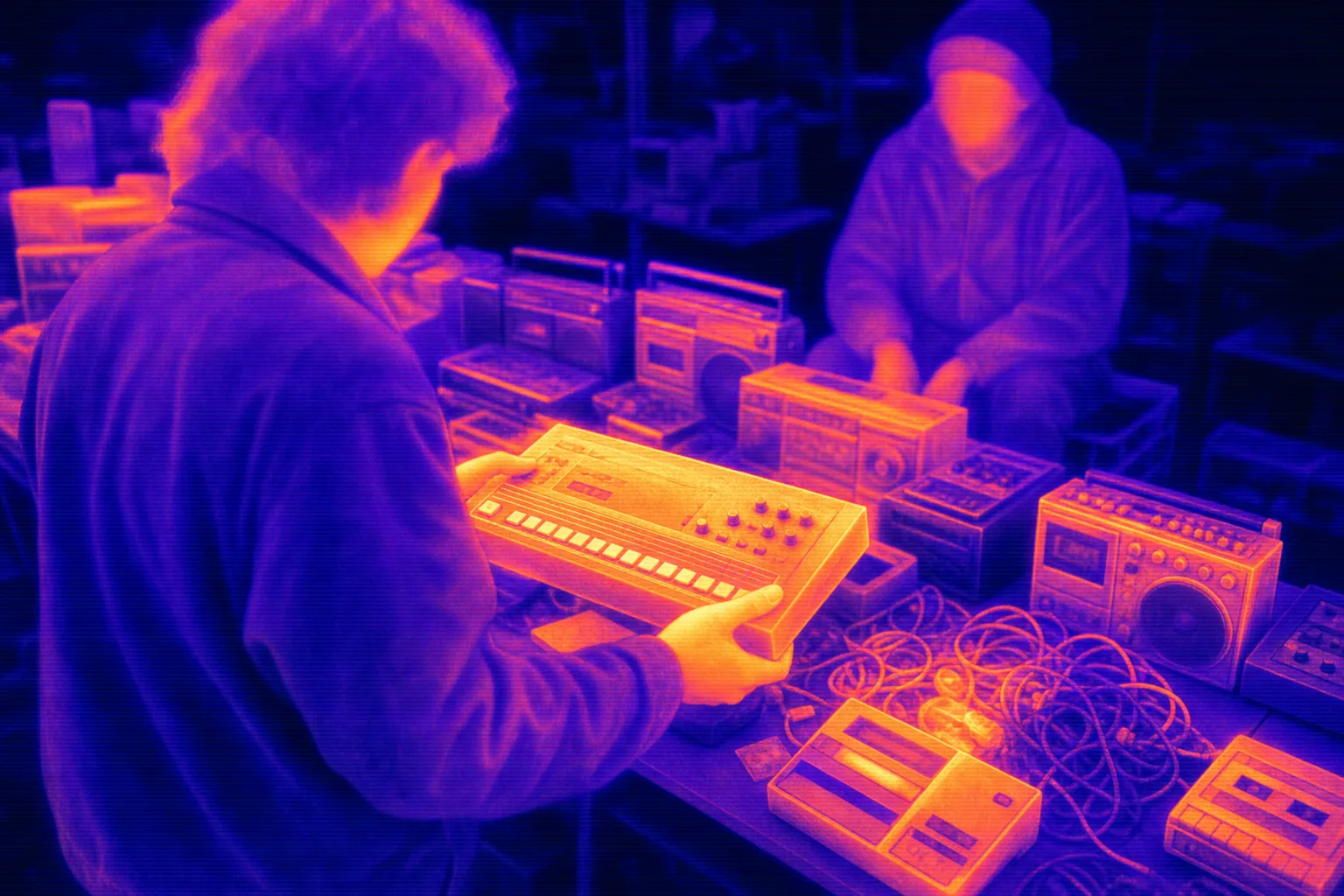 thermal
The first drum machine was made for organists who had nobody to play with. In 1959 the American firm Wurlitzer released a box called the Sideman, meaning the accompanist, which used vacuum tubes to imitate a dozen percussion instruments and could tap out twelve preset rhythms, from waltz to foxtrot, at any tempo. You could not play anything of your own on it: the musician chose a rhythm the way you choose a program on a washing machine and played over the top.
The Japanese engineer Ikutaro Kakehashi was born in 1930 in Osaka, lost both parents to tuberculosis as a child and was raised by his grandparents. In 1947, at seventeen, he started repairing watches and radios. As a student he caught tuberculosis himself and ended up in a sanatorium, where a drug that was new at the time, streptomycin, was tested on him. He survived, and by twenty-eight he had decided he would make electronic instruments for amateurs who had never studied music and could not pay for expensive instruments.
This chapter is in the full book
The prologue and the first three chapters are open. The rest of the book, 44 more parts with illustrations, in four languages, opens after one payment. Yours for good.
Sign in first: the book is tied to your INITE account, so it opens on any device.