Prologue. Music No Longer Lives in the Instrument
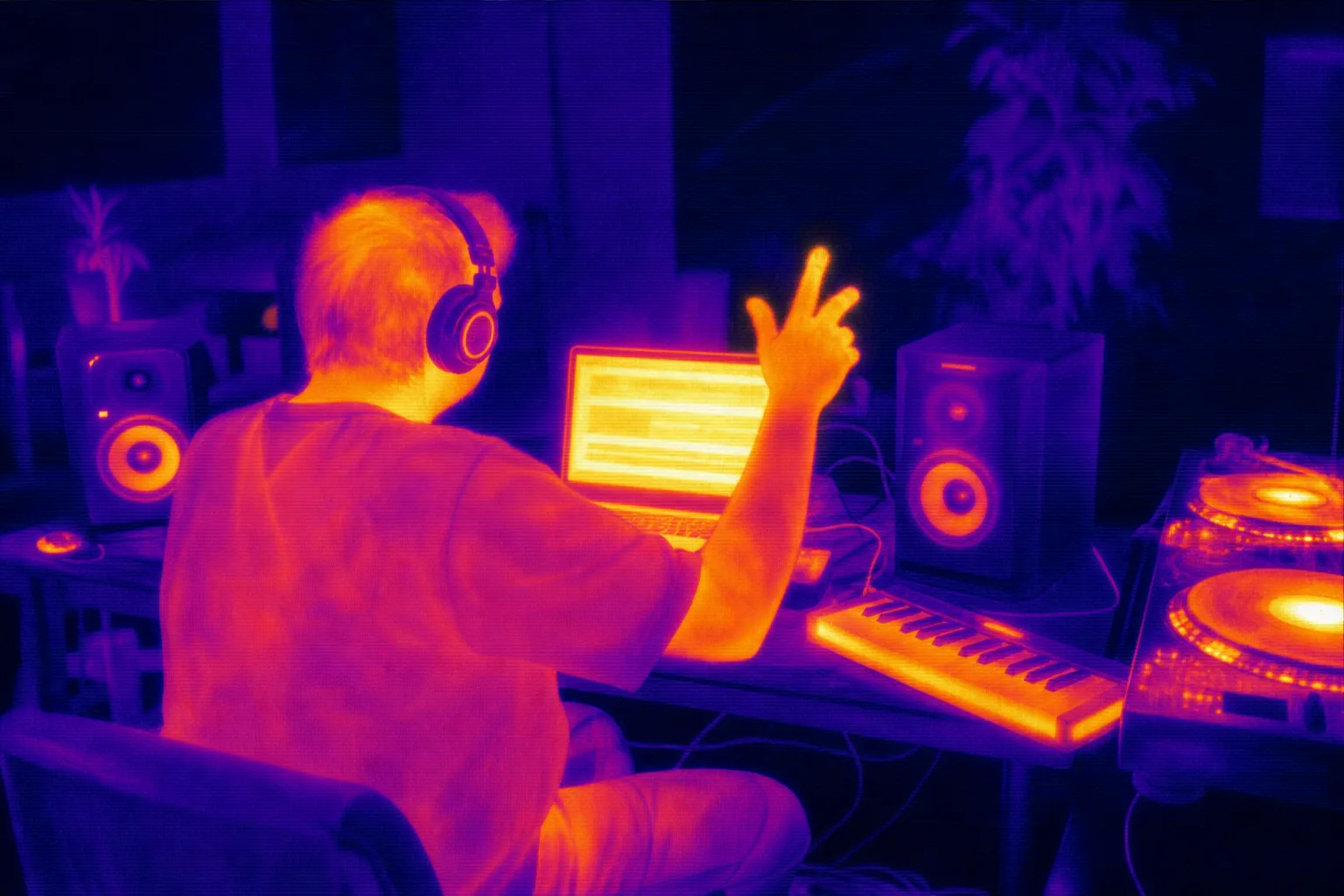 thermal
One evening I was sitting over Suno, flipping through variations with the kind of excitement you feel as a kid flipping through bubble-gum wrappers, until one of the generations produced a magical piece of psychedelia. It was the music I used to run for years on my Pioneers, except that above it unfolded incredible concert orchestrations, and the strings came in on the kick so neatly you would think the arranger had spent half his life in an orchestra pit and the other half on the dance floor. No such arranger ever existed. I explained to the machine in words what I wanted, listened, winced, explained again, and at some point stopped wincing.
Not long ago a piece like that would have meant paying everyone in turn. An orchestra costs money, an arranger costs money, the studio where that orchestra gets seated on its chairs costs money too, but the most expensive thing is time, because over three weeks of recording a person manages to fall out of love with his own idea. Suno wins on speed. In one evening with it you can test more ideas than you used to get through in a month, throw away nine out of ten and keep the one that sounds the way you heard it while it lived only in your head. That is where the machine ends and the craft I know how to do myself begins. I take the find apart, assemble the final version in Ableton and bring it to a master I would not be ashamed to hand to club speakers.
When the orchestrations had faded, I got curious about the road that brought us here. Between copper wire, the vacuum tube and a machine you explain music to in words lie only a hundred years, and for all those hundred years people handed their work over to the machine one step at a time, the way you hand things in at a left-luggage office without much hope of getting them back. First they gave it the sound source itself, then the memory of sound, then performance, then sound as material, then the whole studio, the rules of composition, hearing and, last of all, composition. Each of these steps some greeted as liberation and others as the funeral of music, and after each one music began to sound different from before.
Asking who counts as a musician now, when a track takes a minute, is worth doing, I think, from the very beginning, from the first instrument in which sound was born straight out of electricity. It was built strangely. People played it without touching it.