Automation
 thermal
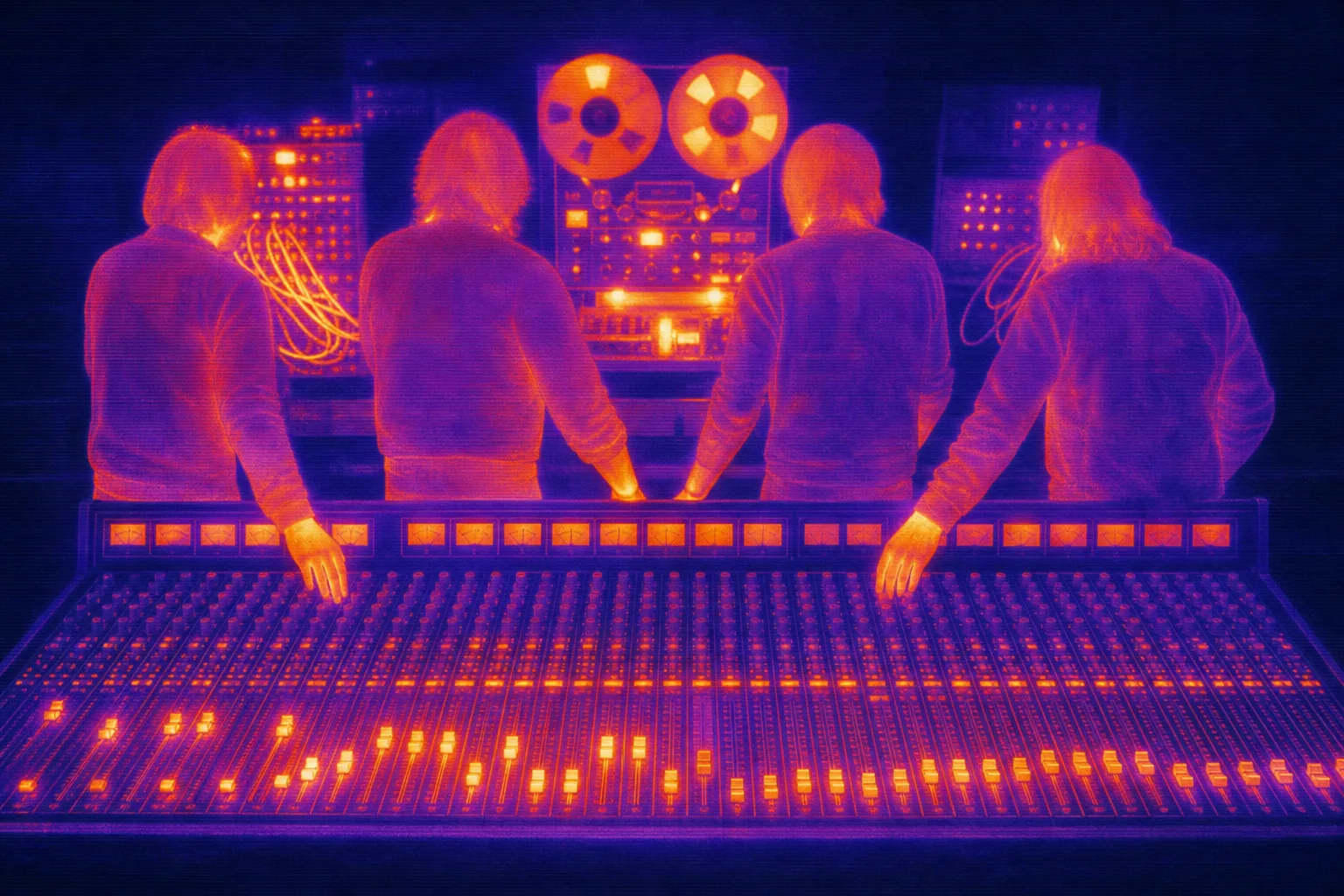
As late as the seventies, mixing a song was a small concert played on the desk. The tape with two dozen tracks ran from beginning to end, and around the desk stood the engineer, his assistant, the producer, sometimes the musicians themselves, and each had faders of their own. One brought the voice up in the chorus, another pulled the guitar down in the second verse, a third added echo to the drums at the right moment. The song was rehearsed like a play, run through again and again, and if someone was late by a bar, everything started from the top. A good take was recorded to the master tape, and it could never be repeated exactly, because it lived only in the hands of a few people during one particular minute.
The first machines that took on the job of remembering those hands appeared in the mid-seventies. The positions of the faders were turned into data and recorded onto two spare tracks of the same tape, and on playback the desk changed the volume by itself according to that data. The faders themselves stayed still; the volume changed somewhere inside, in voltage-controlled amplifiers, and the engineer looked at a desk that showed one thing and sounded like another.
This chapter is in the full book
The prologue and the first three chapters are open. The rest of the book, 44 more parts with illustrations, in four languages, opens after one payment. Yours for good.
Sign in first: the book is tied to your INITE account, so it opens on any device.