Algorithmic Music
 thermal
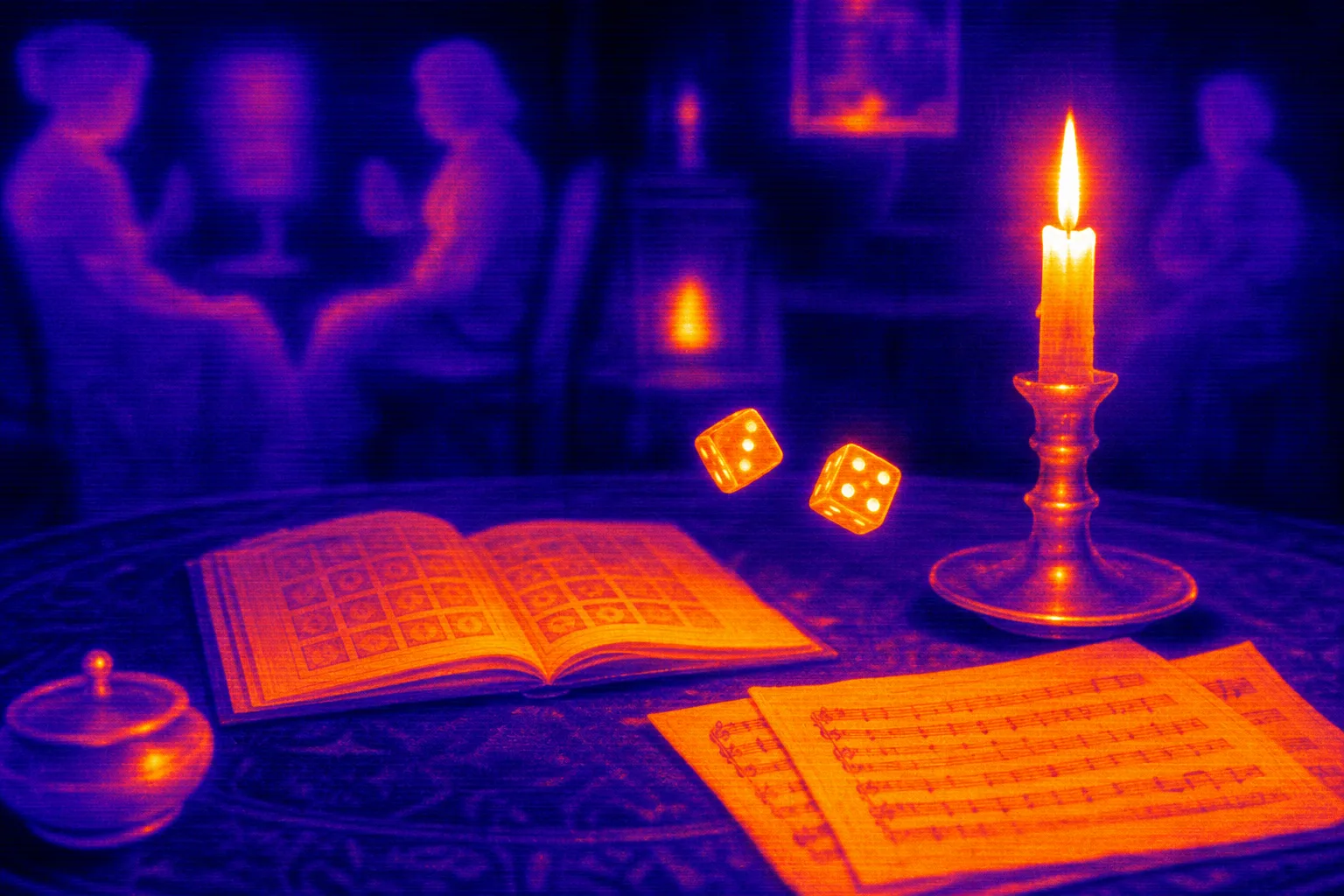
At the end of the eighteenth century, people in German drawing rooms played dice to compose music. A publisher sold a thin booklet with several hundred bars printed in it and a table. You throw two dice, look up in the table which bar corresponds to the sum, write it down first, throw again, and so on sixteen times, until a waltz comes together. One of the first such games was published in 1757 by the Berlin theorist Johann Philipp Kirnberger, who called it “The Ever-Ready Composer of Minuets and Polonaises”. The most famous came out in 1792 from the publisher Simrock with Mozart’s name on the cover, although no one has ever managed to prove that Mozart invented it. The number of waltzes you can assemble from its table is seven hundred and fifty-nine trillion and then some, more waltzes than have been played in the whole history of humanity.
In this game the composer wrote the bars and the rule for putting them together, and chance assembled the piece itself. The dice waltzes came out similar to one another and quite decent, because all the bars had been fitted in advance so that any of them would drop into place without a wrong note.
This chapter is in the full book
The prologue and the first three chapters are open. The rest of the book, 44 more parts with illustrations, in four languages, opens after one payment. Yours for good.
Sign in first: the book is tied to your INITE account, so it opens on any device.