The Studio That Moved Into the Computer
 thermal
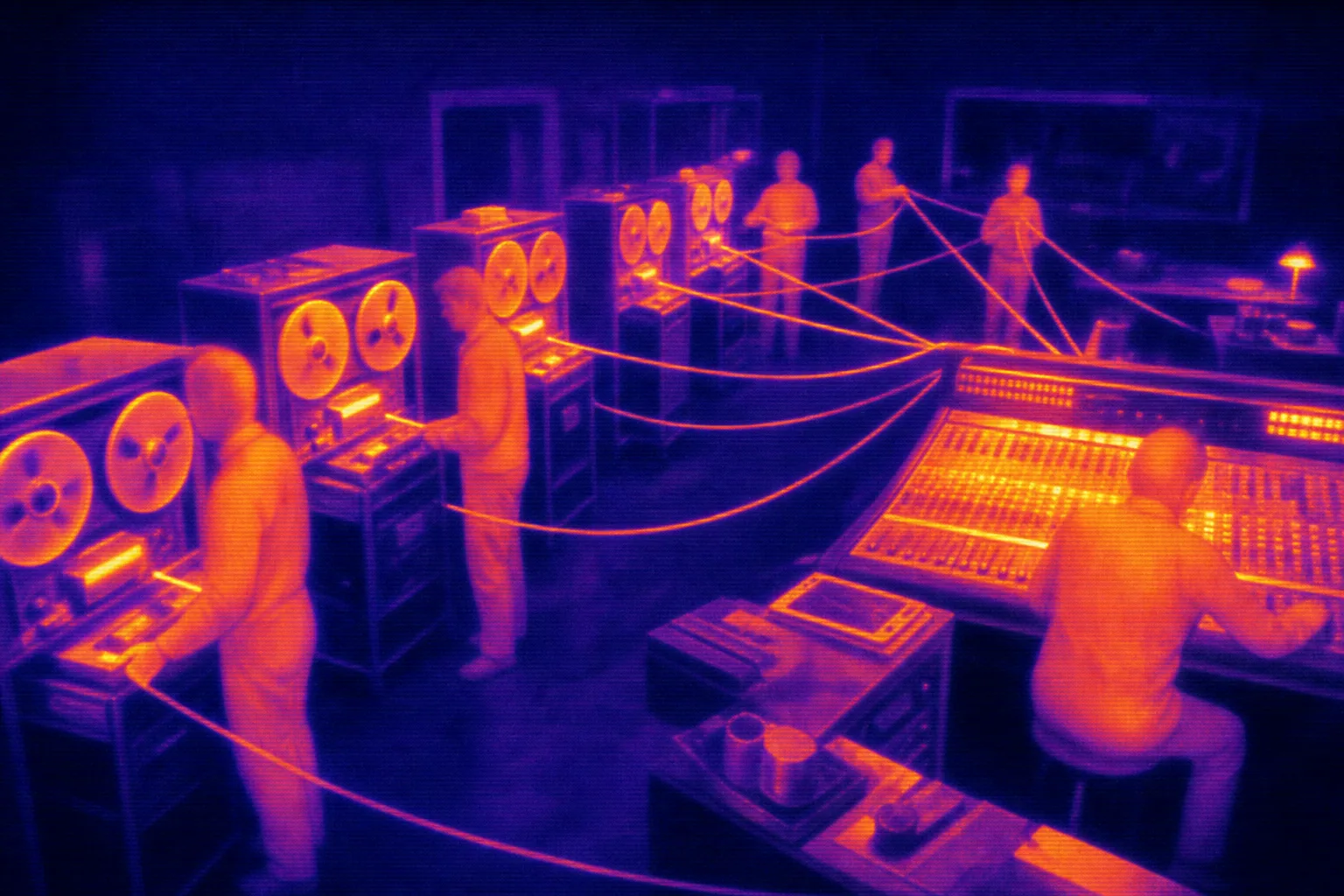
In April 1966, at EMI’s studio on Abbey Road in London, the Beatles were recording “Tomorrow Never Knows,” and for one day the building turned into a musical instrument. Each of the four had made tape loops at home: looped pieces six seconds long with sped-up guitars, laughter, some orchestral scraps. About thirty loops were collected in all, and the producer George Martin picked sixteen. The tape machines with the loops were set up in different rooms of the studio, and next to each sat a technician holding a pencil inside the loop so the tape wouldn’t sag. The sound from all the machines was brought to one desk, and during the song the engineers brought the loops in and out with the faders, the way musicians start and stop notes. Lennon’s voice was put through a rotating Leslie speaker built for the Hammond organ. The young engineer Geoff Emerick put the task like this: every instrument had to sound unlike the way that instrument sounds.
In Jamaica the studio was played as an instrument by a radio repairman, Osbourne Ruddock, known as King Tubby. In 1968 he built his sound system Hometown Hi-Fi in Kingston, huge homemade speakers for street dances, and was the first to bring echo and reverb out onto the street, which until then had existed only in studios. In 1971 he opened a small studio in the Waterhouse district and put a multitrack MCI desk in it.
This chapter is in the full book
The prologue and the first three chapters are open. The rest of the book, 44 more parts with illustrations, in four languages, opens after one payment. Yours for good.
Sign in first: the book is tied to your INITE account, so it opens on any device.