Auto-Tune and the War Against ‘Dishonest Music’
 thermal
In the mid-nineties the engineer Andy Hildebrand was having lunch at a music trade show with partners and a distributor, and the conversation turned to what device to make next. One of the women at the table said: “Andy, why don’t you make me a box that would have me sing in tune.” As Hildebrand remembers it, everyone at the table silently stared down at their plates.
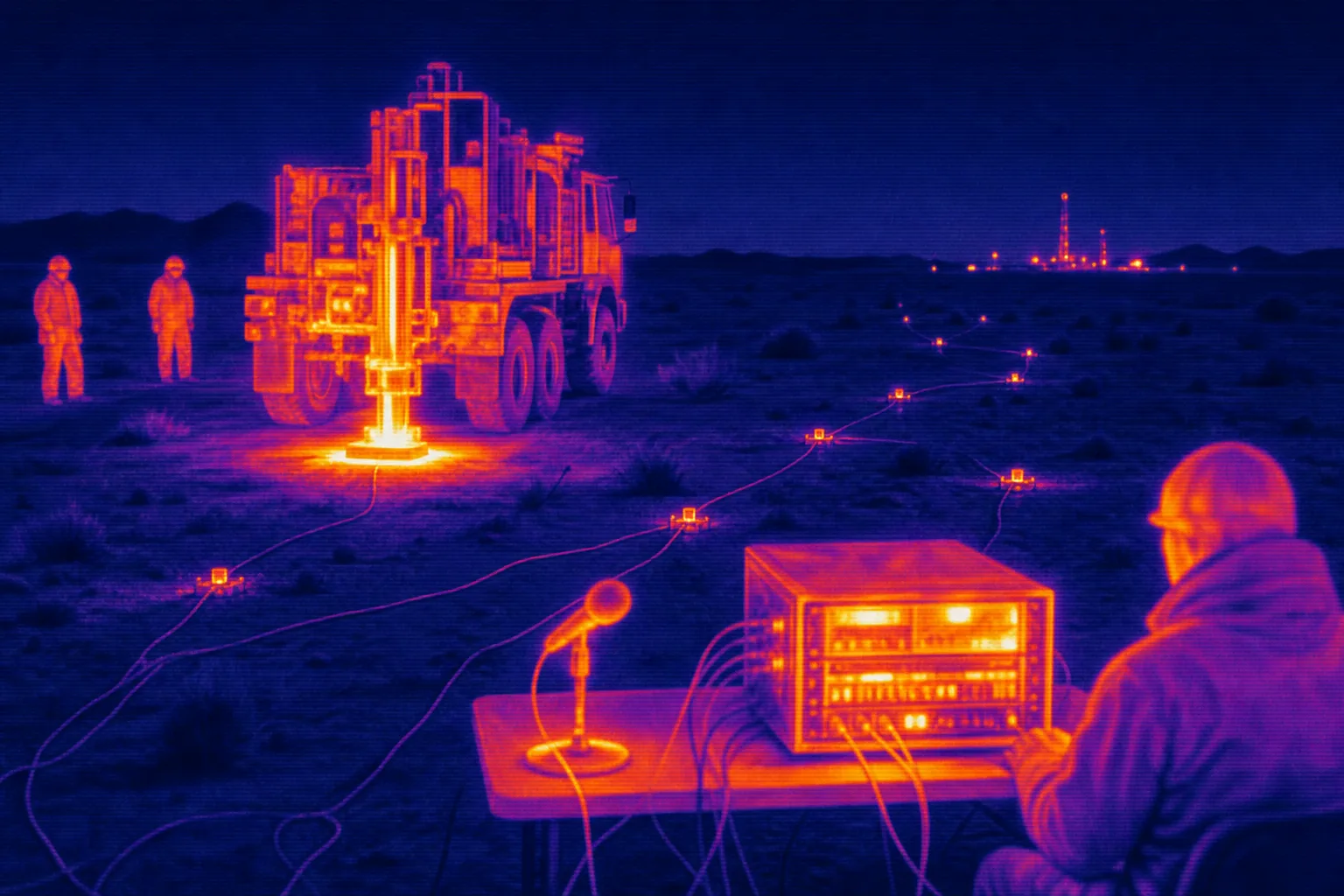
Hildebrand was not a music engineer in the usual sense. He had played the flute professionally since childhood, but by training he was a signal-processing mathematician, and he spent the first fifteen or so years of his career looking for oil. At Exxon, and later at his own company Landmark Graphics, he wrote software for seismic exploration: you send a shock into the ground, listen to the reflected waves and use them to reconstruct what lies at depth. The main tool in this work was autocorrelation, a way of finding a repeating pattern in a signal. A singer’s voice is also a signal with a repeating pattern, and the period of that pattern sets the pitch of the note. Hildebrand simplified the math so that it could keep up in real time, and on the nineteenth of September 1997 his company Antares released Auto-Tune. The device found the pitch of a sung note and quietly pulled it toward the nearest correct one.
This chapter is in the full book
The prologue and the first three chapters are open. The rest of the book, 44 more parts with illustrations, in four languages, opens after one payment. Yours for good.
Sign in first: the book is tied to your INITE account, so it opens on any device.