Ableton Live. Music Stopped Being Just a Recording
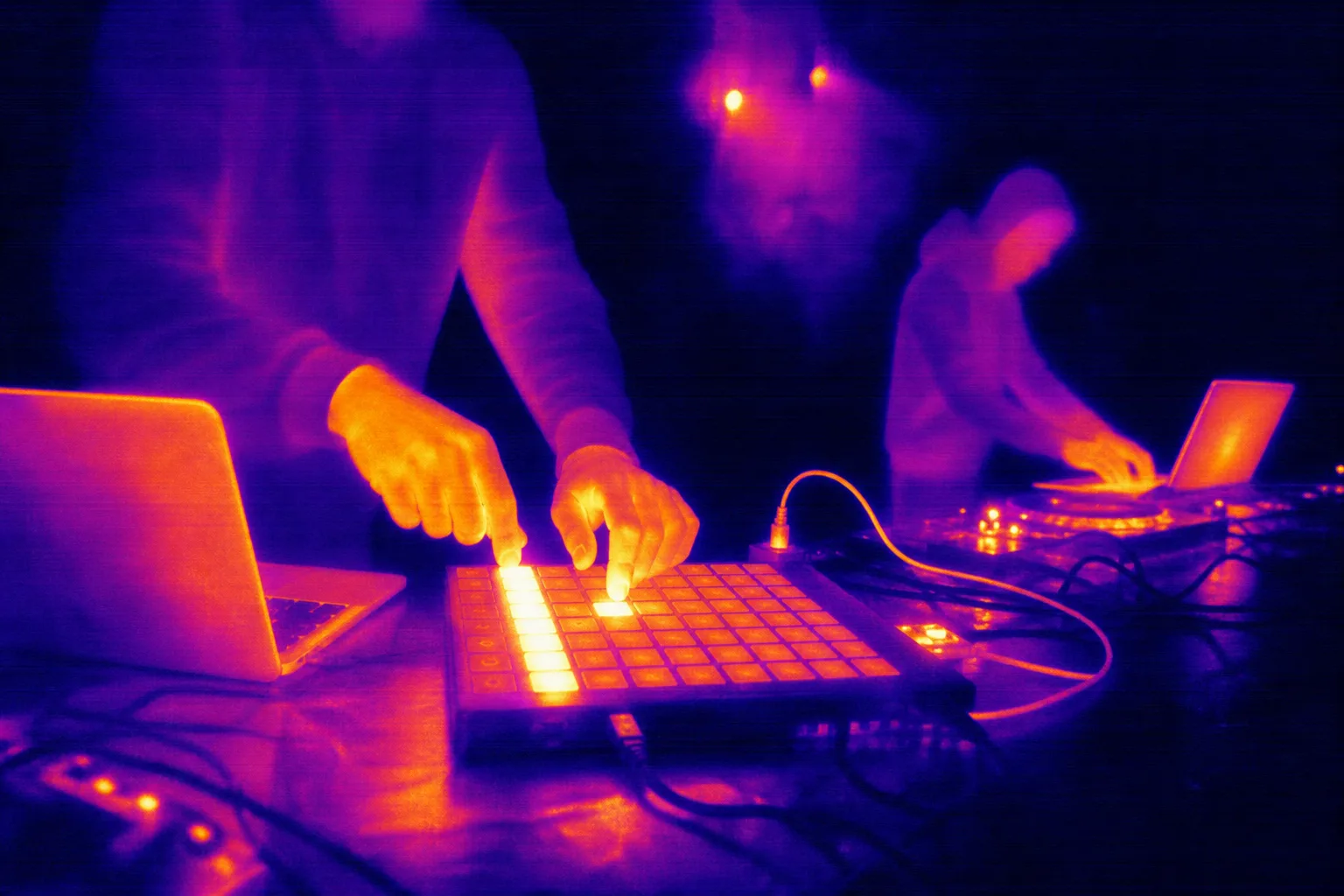 thermal
In the mid-nineties Robert Henke and Gerhard Behles played electronic music in Berlin under the name Monolake. Performing with a computer back then was torture. Music recording programs were built on the model of a tape recorder: a track had a beginning and an end, the cursor ran from left to right, and everything that was supposed to sound had to be laid out on the tape in advance. On stage this turned the musician into a man who presses the play button and then pretends to be busy with something. Henke and Behles wrote their own programs for concerts, and in 1999, together with the programmer Bernd Roggendorf, founded the company Ableton to turn their home-made tools into a product.
Ableton Live came out in 2001, and the main thing in it was a screen called Session View. Instead of a tape there was a grid of cells, tracks in the columns, pieces of music in the rows: a bass loop, a drum break, chords, a voice. Any cell could be launched at any moment, and the program itself waited for the start of the next bar so as to come in exactly on the beat. It stretched and squeezed recorded audio to fit the current tempo without changing its pitch, so a loop from someone else’s record at ninety beats per minute could be dropped straight under a beat at a hundred and twenty.
This chapter is in the full book
The prologue and the first three chapters are open. The rest of the book, 44 more parts with illustrations, in four languages, opens after one payment. Yours for good.
Sign in first: the book is tied to your INITE account, so it opens on any device.