The Sampler: Why Synthesize a Drum When You Can Steal a Real One
 thermal
Around 1978 in Sydney two engineers, Peter Vogel and Kim Ryrie, were building a digital synthesizer and at some point recorded a short piano sound, a single note, into their machine’s memory. Then they played the recording higher and lower on the keyboard and heard that at any pitch it sounded surprisingly like a real piano. “Nobody had done that before,” Vogel recalled. For the new technique they came up with the word sampling, from sample, and in 1979 they released a machine called the Fairlight CMI. Ryrie took the name from a hydrofoil ferry that ran past his grandmother’s house.
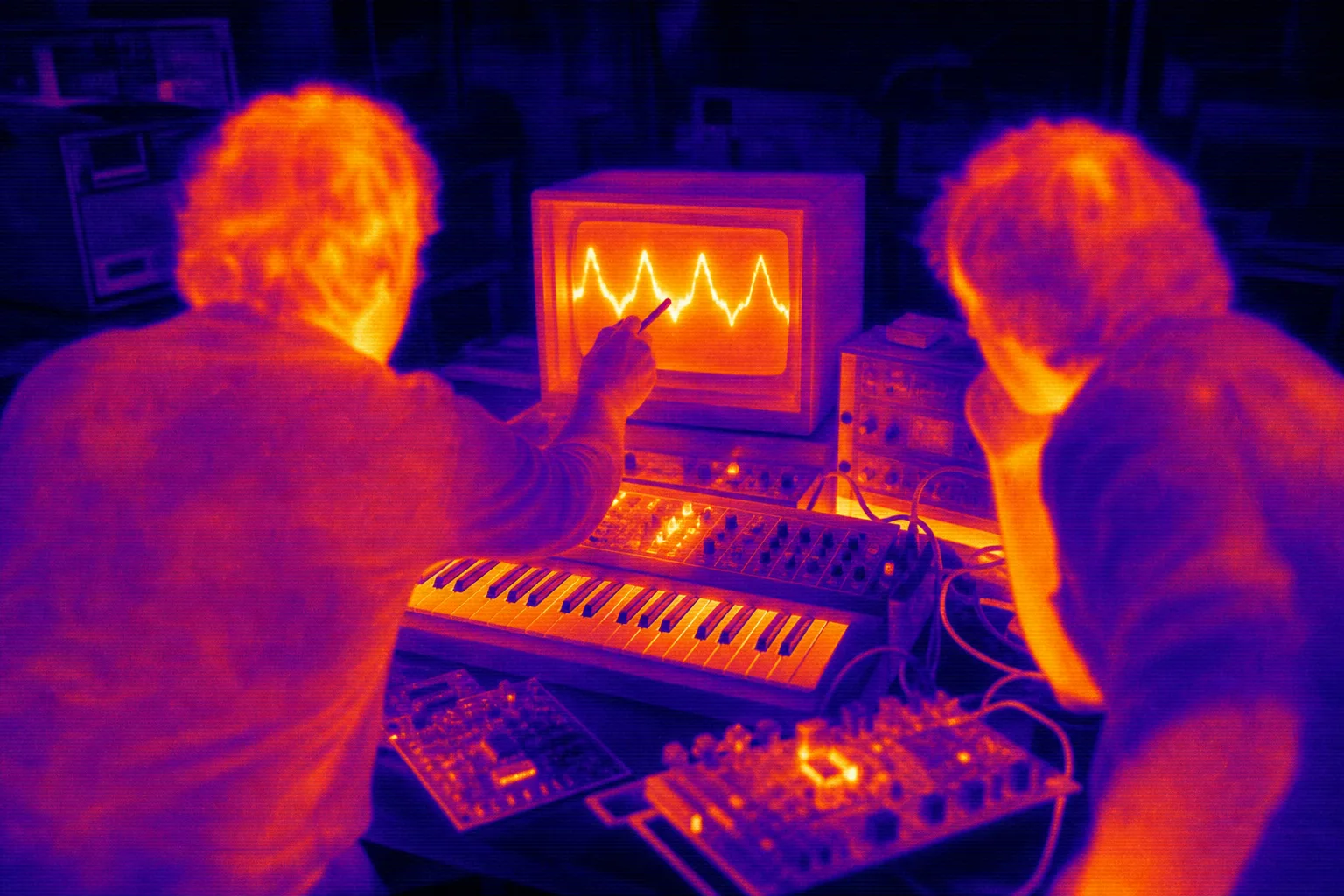
The Fairlight cost fifteen thousand pounds and up and looked like an office computer with a keyboard: a monitor on which you could draw sound with a light pen, and seven octaves of keys. Any recorded sound, whether a voice, a door slam or a hit on a saucepan, became an instrument in it on which you could play melodies. In 1982 the second version added the Page R sequencer, where a part was put together right on the screen, and the Fairlight spread through the expensive studios of the eighties. The first in Britain to buy one was Peter Gabriel, followed by Kate Bush, Stevie Wonder, Herbie Hancock and Jean-Michel Jarre.
This chapter is in the full book
The prologue and the first three chapters are open. The rest of the book, 44 more parts with illustrations, in four languages, opens after one payment. Yours for good.
Sign in first: the book is tied to your INITE account, so it opens on any device.