Moog. Music Had to Be Assembled Like a Lab Bench
 thermal
In 1963, at a trade fair for school music teachers in Rochester, New York, a Cornell physics graduate student named Robert Moog was standing by his booth of theremins when a young instructor from Hofstra University named Herb Deutsch came up to him. Deutsch composed experimental jazz, tinkered with tape recorders and explained that he needed a device that would make sounds he could not get by splicing tape. By then musicians had been cutting tape for twenty years and had squeezed almost everything out of it that it had to give, and Deutsch wanted more: a source from which new sound could be drawn at once, by playing, without a razor blade and weeks of editing. Moog invited him over.
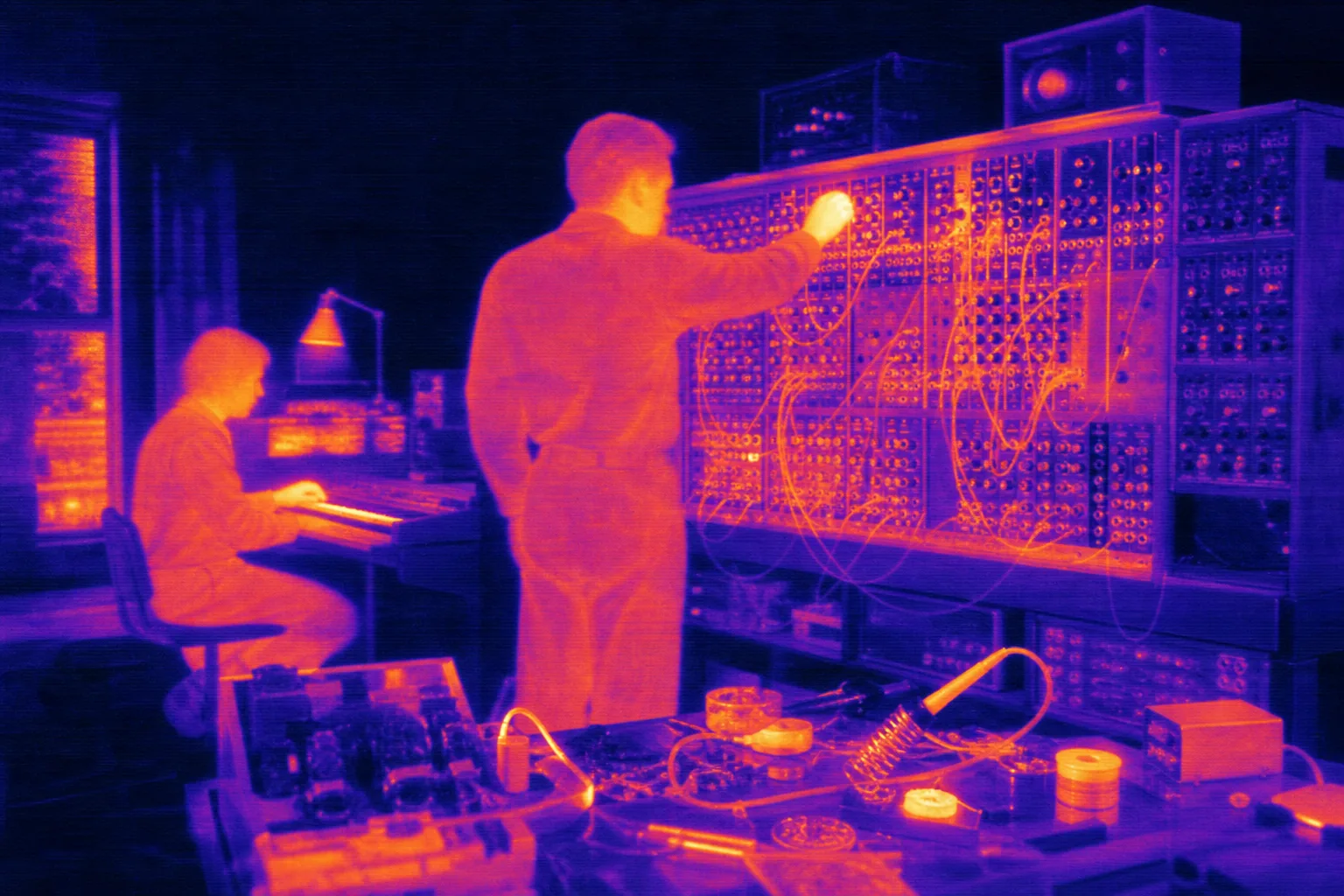
The following summer Deutsch came to Trumansburg, a small town upstate where Moog had his workshop, and the work went the way almost the whole history of synthesizers would later go. Deutsch said what he needed, Moog soldered, Deutsch tried it and said what was missing, and Moog soldered again. Moog later called himself a toolmaker who builds instruments for other people’s hands, and that description is more accurate than any of the epithets he was awarded later: everything he came up with, from the envelope to the pitch wheel, was born from the requests of musicians who did not know how to build such a thing but knew exactly what they needed.
This chapter is in the full book
The prologue and the first three chapters are open. The rest of the book, 44 more parts with illustrations, in four languages, opens after one payment. Yours for good.
Sign in first: the book is tied to your INITE account, so it opens on any device.