MIDI. The Protocol That Outlived Almost Everything
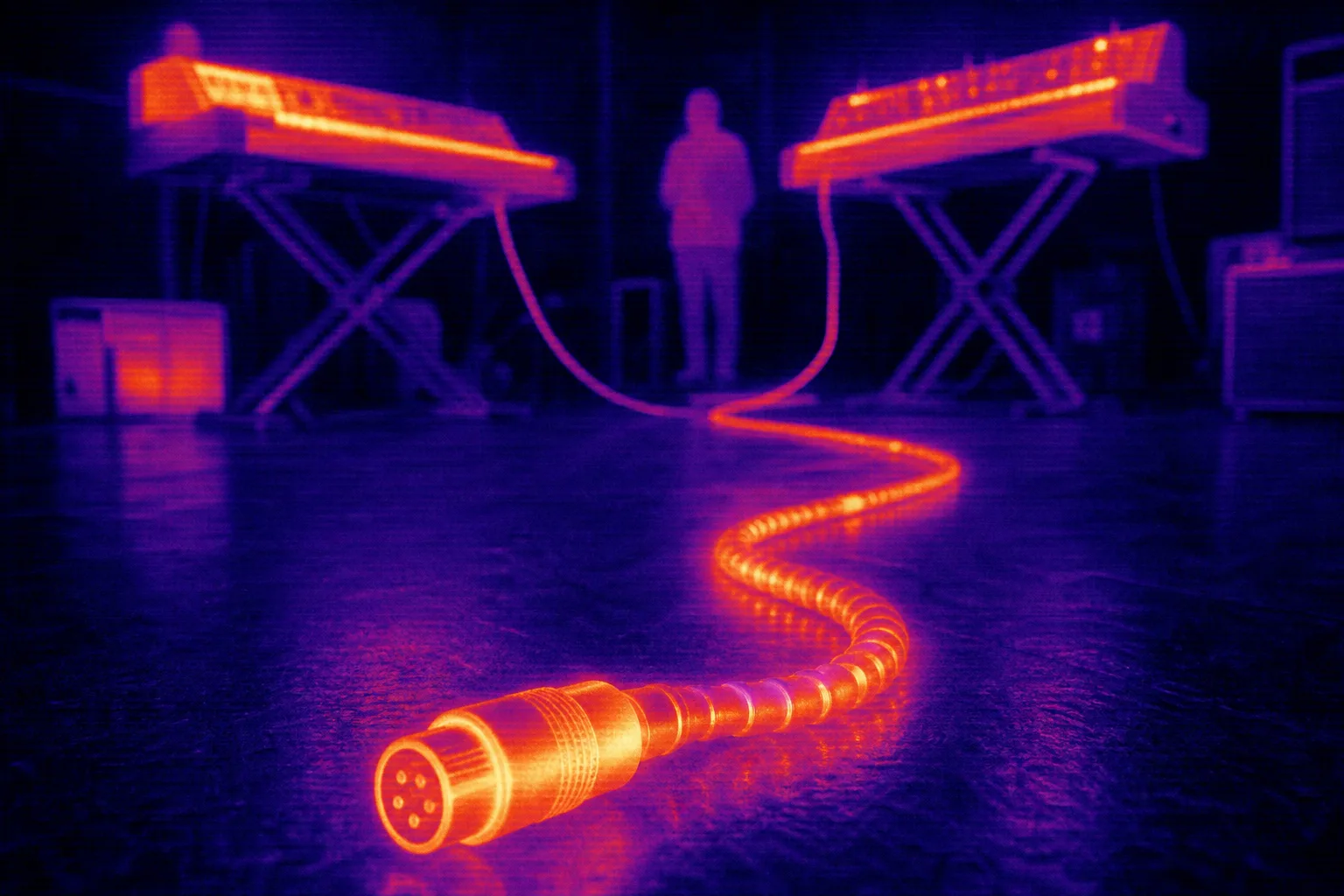 thermal
I had a floppy disk, and on the disk were a few dozen songs, and each weighed a few kilobytes, less than a bad-quality photo. And yet each of them held a whole ensemble with drums, bass, keyboards and strings, and sometimes horns as well. I carried these disks to street musicians who had Yamaha keyboards of the self-playing breed, with a disk drive and support for the XG standard. The musician inserted the disk and picked a song, after which the instrument started playing for the whole band, and all the person had to do was sing over it or carry the melody with the right hand. For passers-by on the corner a small orchestra played in which there wasn’t a single orchestra player.
There was no music on the disk, though. It held MIDI files, and MIDI doesn’t store sound. What it records is an instruction: at such-and-such a moment press such-and-such a key with such-and-such force, hold it for so long, release it, on such-and-such an instrument. The sound was assembled from this instruction by the Yamaha keyboard itself, with its built-in instruments, and that is why the file weighed a thousand times less than a recorded song of the same length.
This chapter is in the full book
The prologue and the first three chapters are open. The rest of the book, 44 more parts with illustrations, in four languages, opens after one payment. Yours for good.
Sign in first: the book is tied to your INITE account, so it opens on any device.